
The Podcast For Clay Shooters
The Ultimate Sporting Clays Podcast
The Shotgun Sports USA Podcast is all about sharing the stories, insights, and personalities from the world of shotgun sports with shooters everywhere. Whether you're just starting out and looking to hit your first 50 straight, a competitive NSCA shooter aiming for Master Class, a FITASC competitor, or just someone who loves hunting with friends, we're here to help you improve your shooting skills while honoring the amazing people involved in these sports. Since its debut in 2020, Shotgun Sports USA has quickly become a go-to podcast in the clay target community. We host discussions with World Champions, National Champions, Olympic athletes, instructors, target setters, club owners, manufacturers, and innovators from all corners of the shooting sports world. Our episodes cover everything from sporting clays and FITASC to trap, skeet, hunting, equipment, competition, and the people behind the sport.
+200 ODDS
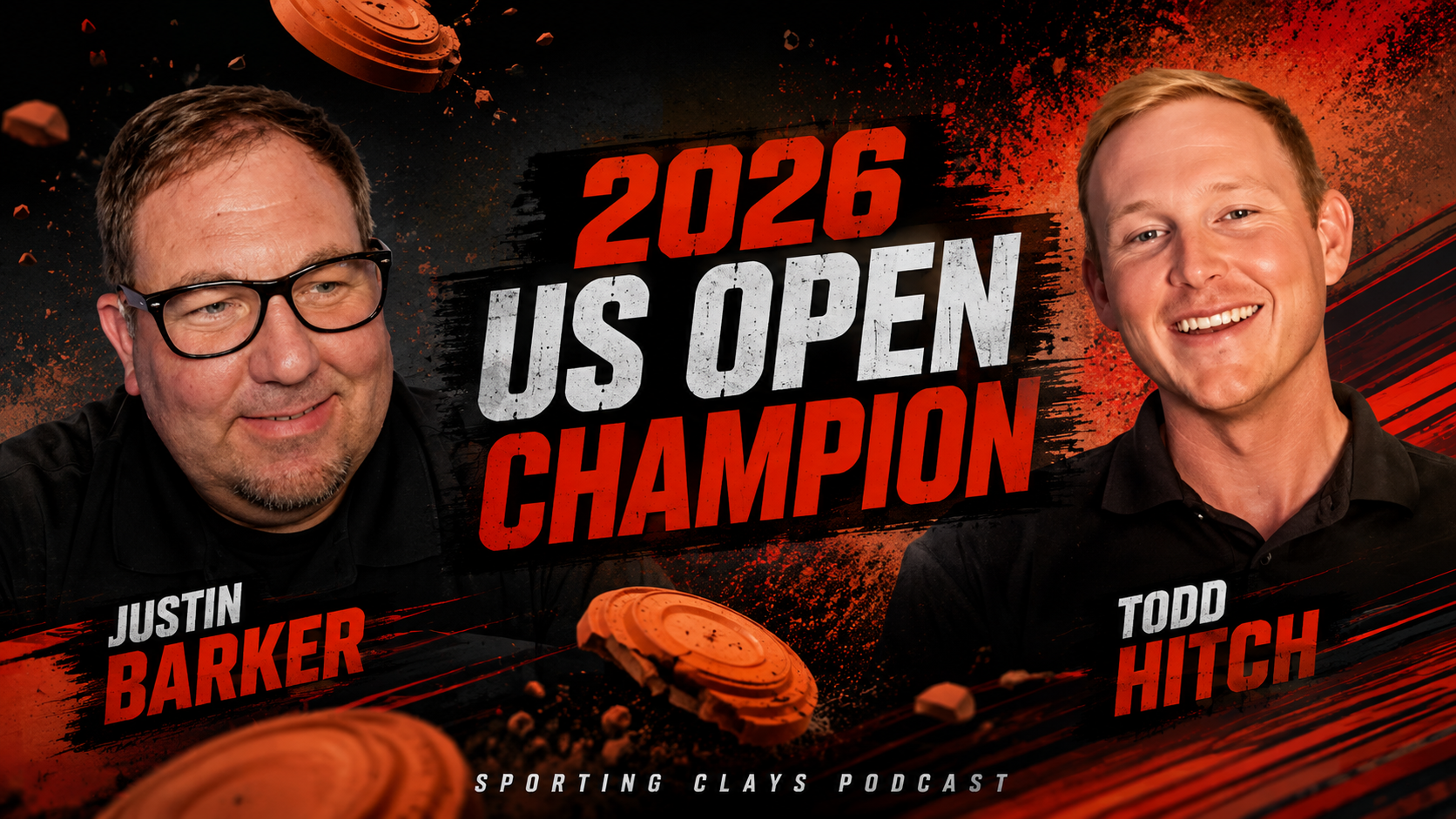
Todd Hitch
Todd Hitch is ranked #1 in our Main Event forecast because the model combines several pieces of his tracked Main Event record rather than relying on one result. His record in the data includes 3 Top 10s in 4 tracked starts (75.0% Top-10 rate), 2 wins, 2 podiums, a 184.0 average recorded Main Event score and an average performance of 97.9% of the event HOA score. This prediction is simulation-based rather than a fixed weighted ranking. A shooter must first have at least 3 tracked Main Event starts. Eligible shooters are then evaluated on recent form, long-term scoring level, scoring ceiling, consistency, and win/pressure history before entering 10,000 simulated Main Events. The model then simulated the next Main Event 10000 times after a performance pre-screen removed historical records that had no realistic winning ceiling. This shooter won 3326 of those simulations, producing a 33.3% projected win chance and approximately +200 in American-style odds. His average simulated score was 185 targets. These are model estimates, not a guarantee.
Derrick Mein
Derrick Mein is ranked #2 in our Main Event forecast because the model combines several pieces of his tracked Main Event record rather than relying on one result. His record in the data includes 3 Top 10s in 3 tracked starts (100.0% Top-10 rate), 2 podiums, a 186.0 average recorded Main Event score and an average performance of 98.7% of the event HOA score. This prediction is simulation-based rather than a fixed weighted ranking. A shooter must first have at least 3 tracked Main Event starts. Eligible shooters are then evaluated on recent form, long-term scoring level, scoring ceiling, consistency, and win/pressure history before entering 10,000 simulated Main Events. The model then simulated the next Main Event 10000 times after a performance pre-screen removed historical records that had no realistic winning ceiling. This shooter won 2549 of those simulations, producing a 25.5% projected win chance and approximately +290 in American-style odds. His average simulated score was 186 targets. These are model estimates, not a guarantee.
Zachary Kienbaum
Zachary Kienbaum is ranked #3 in our Main Event forecast because the model combines several pieces of his tracked Main Event record rather than relying on one result. His record in the data includes 3 Top 10s in 5 tracked starts (60.0% Top-10 rate), 1 podium, a 179.6 average recorded Main Event score and an average performance of 95.7% of the event HOA score. This prediction is simulation-based rather than a fixed weighted ranking. A shooter must first have at least 3 tracked Main Event starts. Eligible shooters are then evaluated on recent form, long-term scoring level, scoring ceiling, consistency, and win/pressure history before entering 10,000 simulated Main Events. The model then simulated the next Main Event 10000 times after a performance pre-screen removed historical records that had no realistic winning ceiling. This shooter won 652 of those simulations, producing a 6.5% projected win chance and approximately +1,435 in American-style odds. His average simulated score was 181 targets. These are model estimates, not a guarantee.
How We Got These Picks
Our prediction begins with the actual shooters entered in the upcoming Main Event. Historical results tell us how those shooters have performed; the upcoming entry list tells us who is eligible to be picked. A shooter must also have at least 3 tracked Main Event starts so the model has enough history to evaluate him. We then build a performance profile for every eligible shooter and simulate the tournament 10,000 times. The three shooters who win most often across those simulations become our predicted HOA, Runner Up, and 3rd Place.
Our 3 Predictions — Simulation Breakdown
| Shooter | Starts | Wins | Podiums | Top 10s | Avg Score | Recent % HOA | Ceiling % HOA | Sim Wins | Win Chance | Odds |
|---|---|---|---|---|---|---|---|---|---|---|
| Todd Hitch | 4 | 2 | 2 | 3 | 184.0 | 98.6% | 99.4% | 3,326 / 10,000 | 33.3% | +200 |
| Derrick Mein | 3 | 0 | 2 | 3 | 186.0 | 98.6% | 99.3% | 2,549 / 10,000 | 25.5% | +290 |
| Zachary Kienbaum | 5 | 0 | 1 | 3 | 179.6 | 95.5% | 98.3% | 652 / 10,000 | 6.5% | +1,435 |
2. At least 3 Main Events are required: One exceptional tournament can make a shooter look stronger than he really is. Requiring three tracked Main Event starts gives the model enough evidence to begin measuring repeatability, consistency and form. Shooters with fewer than three starts remain in the historical database but are not eligible for the prediction.
3. We compare performance to the HOA: A raw score does not tell the entire story because tournament difficulty changes. The model measures a shooter's score relative to the HOA score from that event. For example, shooting 188 when the HOA is 190 is a stronger relative performance than shooting 188 when the HOA is 198.
4. Recent form — 46%: Recent Main Events receive the most influence. Older results gradually lose influence, using approximately a 120-day half-life. This allows a shooter who is currently performing exceptionally well to move upward without completely erasing his longer history.
5. Long-term performance — 30%: The model uses the shooter's average performance relative to HOA across his tracked Main Events. This provides the stable foundation of the prediction and helps prevent one or two unusual tournaments from dominating the forecast.
6. Scoring ceiling — 18%: Winning often requires more than shooting your average. The model therefore measures the level a shooter has demonstrated he can reach on a great day. The ceiling combines 70% of his best HOA-relative performance with 30% of his long-term HOA-relative average. This rewards proven upside while preventing one career-best score from being treated as normal performance.
7. Winning and finishing history — 6%: Actual Main Event wins, podium finishes and Top-10 finishes provide an additional pressure-performance factor. Wins receive the most credit, followed by podiums and Top 10s. We intentionally keep this portion smaller than scoring performance so past trophies matter without automatically determining the next winner.
8. Consistency matters: Every shooter has his own performance range. A consistent shooter receives a tighter range of possible simulated performances. A more volatile shooter receives a wider range, giving him a greater chance of both an unusually low result and an unusually high winning result. This is one reason the shooter with the highest average is not always the shooter most likely to win.
9. We simulate the tournament 10,000 times: In each simulated Main Event, every eligible shooter receives a performance generated from his individual form, long-term level, ceiling and consistency. The highest simulated performance wins that tournament. We repeat that process 10,000 times.
10. How the final three are selected: We count how many of the 10,000 tournaments each shooter wins. The shooter with the most simulated victories becomes our HOA prediction. The next two become our Runner Up and 3rd Place predictions. The displayed win percentage is the shooter's simulated wins divided by 10,000.
11. Odds: The displayed American-style odds are calculated directly from the simulation win percentage and rounded to the nearest 5. They are prediction-model odds only and are not a sportsbook line.
Example: Imagine Shooter A is entered in the upcoming Main Event and has six tracked Main Event starts. His recent performance is excellent, his long-term results are strong, and he has demonstrated a high scoring ceiling. Shooter B has a slightly better historical average but a narrower scoring ceiling. Across 10,000 simulations, Shooter A wins 1,420 tournaments while Shooter B wins 1,180. Shooter A's simulated win chance is therefore 14.2%, and he ranks ahead of Shooter B even though Shooter B may have the slightly higher average score. The model is trying to answer one question: who is most likely to actually win this particular field?
Important: This is a statistical prediction, not a guarantee. Weather, target presentation, travel, equipment, health, shoot-offs and day-of-event performance can all change the actual result.
Performance Rankings
Shooter
Backed By Brands
That Believe In The Sport.
The companies behind Shotgun Sports USA do more than support the podcast—they help us tell the stories, share the knowledge, and connect the people who make the shooting sports community what it is.
Learn From The Best In The Sport
One reason listeners continue coming back is the quality of our guests. Shotgun Sports USA has featured many of the biggest names in clay target sports, including world champions, national champions, Olympians, elite instructors, respected target setters, and leaders throughout the outdoor industry.
What Listeners Take Away
These conversations give listeners access to knowledge that normally comes only from years of experience at the highest levels of the sport.
More Than Just Another Clay Target Podcast
Gear, ammunition, optics, and current events are part of the conversation, but the heart of Shotgun Sports USA has always been the people behind the sport. Every episode goes beyond the equipment to explore competition, preparation, technique, experiences, and the personalities that make shooting sports unique.
Topics You'll Hear About
From championship competition to hunting, equipment, industry news, and personal stories, Shotgun Sports USA brings listeners closer to the people who live the shooting sports.
Thank You for Being Part of the Shotgun Sports USA Community
We appreciate you stopping by Shotgun Sports USA. Whether you've listened to the podcast, read an article, watched a video, or shared our content with another shooter, your support means a lot.