
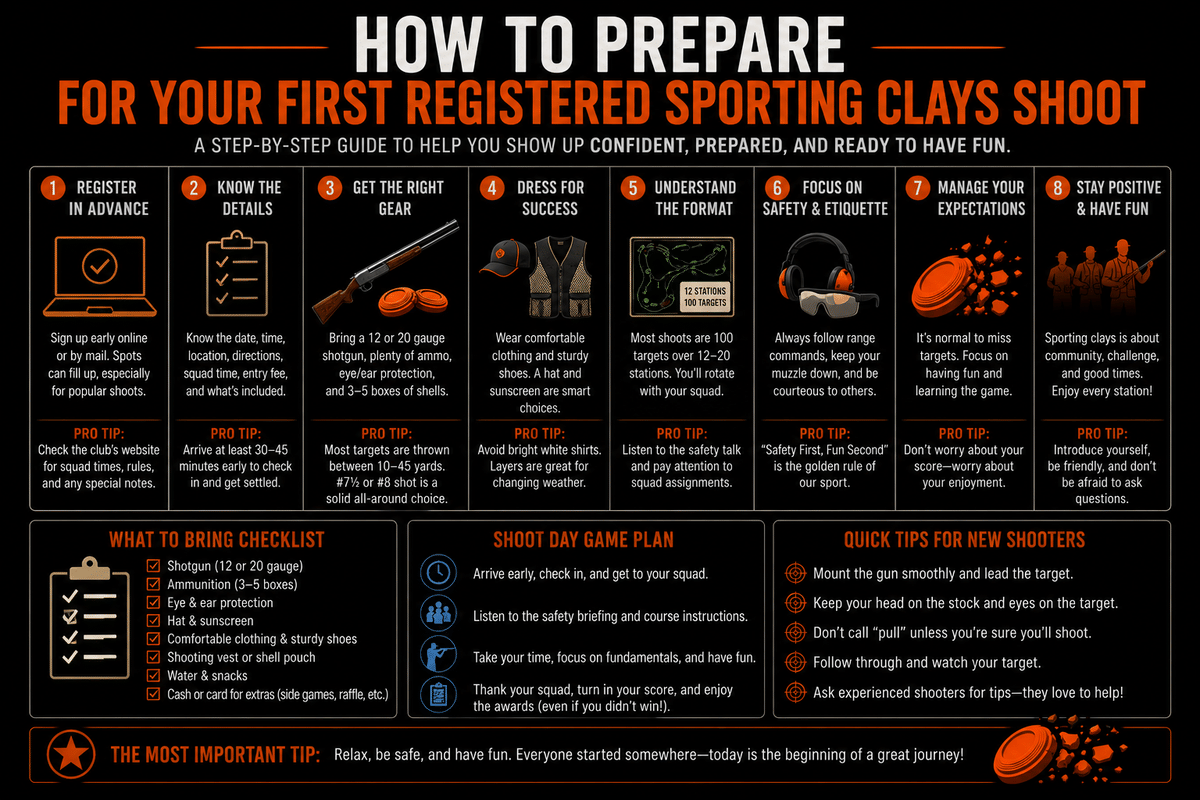
Taking the Next Step in Sporting Clays
For many shooters, registering for a first tournament can feel intimidating. Questions about rules, scoring, classifications, equipment, and expectations often keep people from signing up.
The reality is that registered sporting clays events are designed to be welcoming to shooters of all skill levels. Every competitor, from beginners to national champions, attended a first registered shoot at some point.
A little preparation can help you feel confident, avoid common mistakes, and focus on enjoying the experience.
Understand What a Registered Shoot Is
A registered shoot is a competition sanctioned by the National Sporting Clays Association (NSCA). Scores are recorded and contribute toward a shooter's classification.
Unlike casual rounds, registered events follow standardized rules and procedures. Competitors are grouped into classes based on skill level, allowing shooters to compete against others with similar experience and performance.
For new shooters, the primary goal should not be winning. The goal should be learning how tournaments operate and gaining experience.
Register Before the Event
Most clubs allow online registration or advance sign-ups.
Before the event:
Review the tournament schedule.
Confirm start times.
Verify course information.
Understand event fees.
Check whether pre-registration is required.
Arriving with registration already completed reduces stress and allows more time to prepare.
Know Your Classification
New competitors are typically assigned an initial classification according to current NSCA procedures.
Do not worry about classifications before your first tournament.
The purpose of classification is simply to place shooters into competitive groups with similar skill levels.
Your first event is about experience, not classification.
Check Your Equipment
Several days before the tournament, inspect your equipment.
Make sure you have:
A reliable shotgun
Eye protection
Hearing protection
Shooting vest or shell pouch
Choke tubes if applicable
Water and snacks
A hat and weather-appropriate clothing
Avoid making major equipment changes immediately before your first competition.
Tournament day is not the time to test a new gun, new ammunition, or a completely different shooting setup.
Bring Enough Ammunition
A common mistake for first-time competitors is arriving with too little ammunition.
Always bring more shells than the target count requires.
Additional shells may be needed for:
Shoot-offs
Practice stations
Re-shoots
Warm-up rounds
Having extra ammunition eliminates unnecessary stress.
Arrive Early
Plan to arrive well before your scheduled start time.
Early arrival allows you to:
Check in
Review the course map
Meet squad members
Visit the practice area
Relax before shooting begins
Rushing into a tournament often leads to unnecessary mistakes before the first target is thrown.
Learn Basic Tournament Etiquette
Registered shoots operate smoothly when competitors follow proper etiquette.
Key expectations include:
Be ready when it is your turn.
Remain quiet while others are shooting.
Handle firearms safely at all times.
Respect squad members and event staff.
Keep score accurately when asked.
Good etiquette leaves a positive impression and helps create an enjoyable experience for everyone.
Focus on Safety First
Every club and tournament prioritizes safety.
Remember to:
Keep the action open when not shooting.
Load only when it is your turn.
Keep the muzzle pointed in a safe direction.
Follow all range commands.
Wear eye and hearing protection.
Safe gun handling is far more important than score.
Set Realistic Expectations
Many first-time competitors put unnecessary pressure on themselves.
Your first registered shoot should focus on:
Learning tournament procedures
Understanding squad dynamics
Managing nerves
Developing a pre-shot routine
Gaining experience
A successful first tournament is one in which you finish the event, learn something new, and enjoy the experience.
Expect Tournament Nerves
Almost everyone experiences nerves during their first registered event.
Common reactions include:
Increased heart rate
Rushing shots
Overthinking target presentations
Difficulty concentrating
These feelings are normal.
Focus on one target at a time and trust your preparation.
As tournament experience increases, confidence typically improves.
Watch Experienced Shooters
One of the greatest benefits of competition is the opportunity to learn from others.
Observe how experienced competitors:
Read targets
Choose break points
Establish hold points
Manage emotions
Maintain consistent routines
Tournament experience often provides lessons that cannot be learned on a practice course.
Don't Chase a Score
New competitors sometimes become overly focused on results.
Instead of worrying about score, focus on process:
Read the target carefully.
Develop a plan.
Execute the shot.
Move to the next target.
The best performances often occur when shooters stop thinking about the scoreboard.
Be a Good Squad Member
A positive attitude goes a long way.
Encourage fellow competitors.
Congratulate good shots.
Stay engaged and attentive.
Most shooters remember great squad mates long after they forget tournament scores.
Learn From the Experience
After the event, take time to reflect.
Ask yourself:
What went well?
What challenged me?
What skills need improvement?
What did I learn from other shooters?
Every tournament provides valuable information that can help improve future performance.
Final Thoughts
Your first registered sporting clays shoot is an important milestone. While it may feel intimidating beforehand, most shooters quickly discover that competitions are welcoming, educational, and enjoyable.
Prepare your equipment, arrive early, focus on safety, and keep expectations realistic. The goal is not perfection. The goal is to gain experience, learn from the process, and take the first step into competitive sporting clays.
Every accomplished competitor started exactly where you are now—at their first registered shoot.