
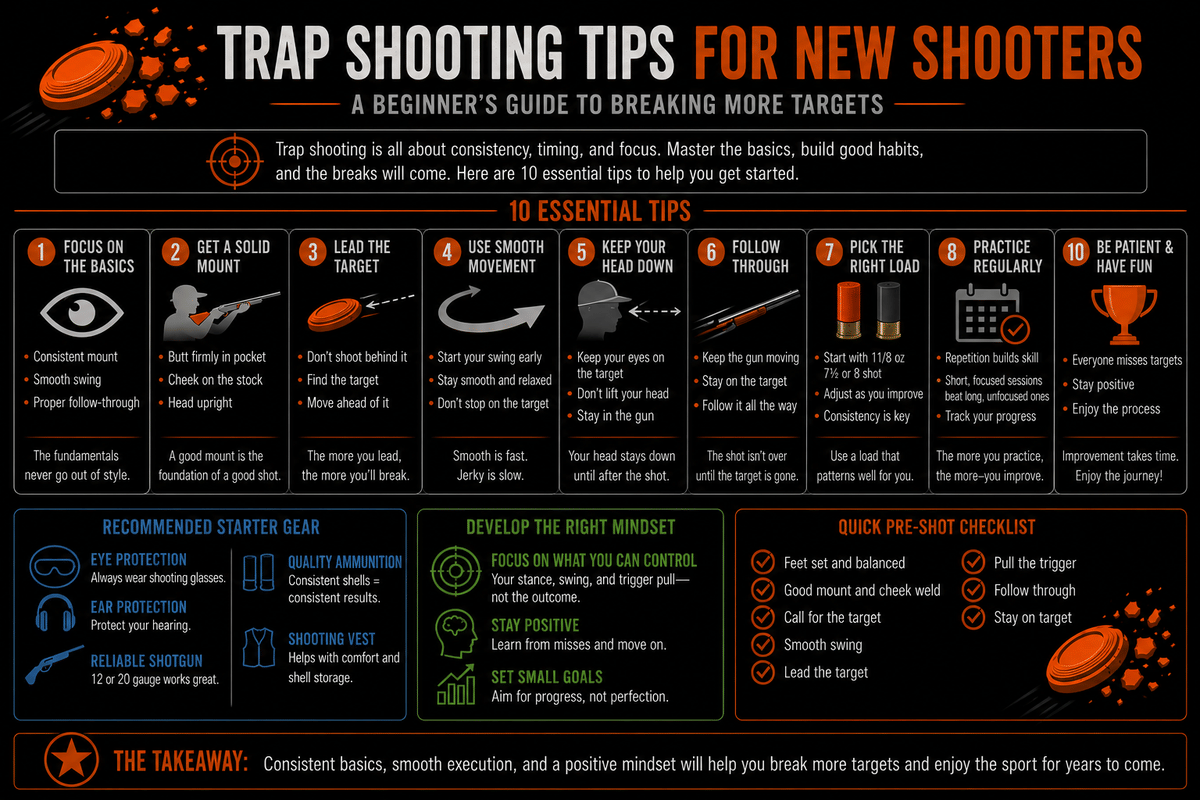
Trap shooting is one of the most popular shotgun sports in the world, offering a fun, challenging, and rewarding experience for shooters of all skill levels. While the basics are easy to learn, consistently breaking targets requires proper technique, focus, and practice.
If you're new to the sport, understanding a few key fundamentals can dramatically improve your confidence and success on the trap field. Here are some essential trap shooting tips to help you get started.
What Is Trap Shooting?
Trap shooting is a clay target sport where shooters attempt to break targets launched away from them from a machine called a trap. Targets are released at varying angles, forcing shooters to react quickly and accurately.
A standard round of trap consists of 25 targets shot from five different shooting stations. The objective is simple: break as many targets as possible.
While the concept sounds straightforward, mastering trap shooting takes patience and consistent practice.
1. Focus on the Target, Not the Bead
One of the most common mistakes new shooters make is staring at the shotgun's front bead.
The bead is not a sight like those found on a rifle. Instead, your eyes should remain focused on the clay target throughout the shot.
When you lock your vision on the target, your hands and shotgun naturally follow where your eyes are looking. This improves target tracking and increases your chances of making a clean break.
2. Start with a Proper Gun Mount
Consistency begins with a proper gun mount.
The shotgun should fit snugly into your shoulder pocket, with your cheek firmly resting on the stock. Your eye should naturally align down the rib without requiring you to lift or lower your head.
A consistent gun mount helps ensure the shotgun points where you're looking every time.
3. Maintain a Balanced Shooting Stance
Good balance is critical for smooth target acquisition and follow-through.
Position your feet shoulder-width apart and place slightly more weight on your front foot. Your body should feel relaxed and athletic rather than rigid.
Before calling for the target, angle your body toward the expected break point rather than directly at the trap house.
4. Keep Your Head on the Stock
Many misses occur because shooters lift their heads at the moment of firing.
This often happens because the shooter wants to see whether they hit the target. Unfortunately, lifting your head changes the gun's alignment and usually causes a miss.
Keep your cheek firmly connected to the stock throughout the shot and continue watching the target break.
5. Establish a Consistent Hold Point
Your hold point is where you position the shotgun before calling for the target.
Most experienced trap shooters hold the barrel just above the trap house. This allows them to see the target quickly while minimizing unnecessary gun movement.
Experiment with different hold points to find what feels most comfortable and effective.
6. Learn to Read the Target
Although trap targets always move away from the shooter, they can angle left, right, or straight away.
Watch several targets before your turn and pay attention to:
Target speed
Flight angle
Wind conditions
Lighting conditions
The more information you gather before shooting, the better prepared you'll be when it's your turn.
7. Don't Aim—Point the Shotgun
Trap shooting is a pointing sport rather than an aiming sport.
Trying to carefully aim at a moving target often leads to hesitation and missed shots. Instead, focus on moving the shotgun smoothly to the target and firing while maintaining motion.
Trust your eyes and your natural hand-eye coordination.
8. Follow Through After the Shot
A common beginner mistake is stopping the gun as the trigger is pulled.
Successful trap shooters continue moving the shotgun after firing. This follow-through helps maintain proper lead and prevents shooting behind the target.
Think of it like swinging through a golf ball or baseball rather than stopping at contact.
9. Practice One Skill at a Time
Many new shooters try to fix everything at once.
Instead, focus on improving one aspect of your shooting during each practice session.
Examples include:
Better target focus
Smoother gun mount
Improved follow-through
More consistent stance
Faster target acquisition
Small improvements add up quickly over time.
10. Take a Lesson from an Experienced Instructor
Professional instruction can dramatically shorten the learning curve.
A qualified coach can identify issues with your stance, gun mount, vision, or technique that may not be obvious to you. Even a single lesson often results in immediate improvement.
Many shooting clubs offer beginner trap clinics that provide an excellent introduction to the sport.
Common Mistakes New Trap Shooters Make
As you begin shooting trap, try to avoid these frequent errors:
Looking at the bead instead of the target
Lifting your head off the stock
Stopping the gun during the shot
Holding the gun too tightly
Rushing the shot
Becoming overly focused on score
Remember that consistency and technique matter more than immediate results.
Equipment Tips for Beginners
You don't need expensive equipment to enjoy trap shooting.
A beginner setup typically includes:
A reliable 12-gauge or 20-gauge shotgun
Target loads with appropriate shot size
Eye protection
Ear protection
A shell pouch or shooting vest
As your skills improve, you can explore specialized trap guns and accessories.
Final Thoughts
Trap shooting is one of the best ways to develop shotgun skills while enjoying friendly competition and time outdoors. By focusing on proper fundamentals—target focus, gun mount, stance, and follow-through—you can improve quickly and start breaking more targets with confidence.
Most importantly, be patient with yourself. Every experienced trap shooter started as a beginner, and consistent practice is the key to long-term success. Stay focused, enjoy the learning process, and celebrate each improvement along the way.