
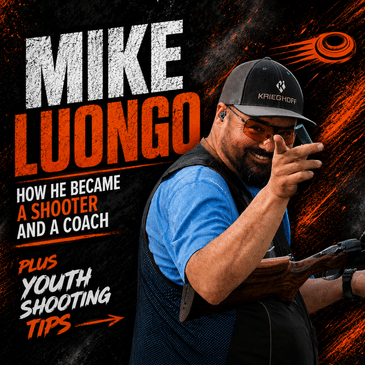
Mike Luongo has been part of the sporting clays world for a long time. He has coached some of the best young shooters in the sport and loves helping others get better. He spends as much time shooting as he can, and wants to see the sport grow.
Mike’s journey started like anyone else—learning, practicing, and working hard to improve. Over the years, he’s gained a lot of experience and turned his passion into coaching and mentoring others. If you want to hear his story, learn how he got to where he is today, or improve your shooting, he’s always happy to help.
Thank you to our show sponsors:
Alamo Sporting Arms
Clay Target Vision
Castellani USA
Promatic Traps
Briley
Does your business want to be part of the podcast? Visit this page
[00:00:00] You're listening to Shotgun Sports USA, powered by Winchester Ammunition, the American legend. From elite competitors to dedicated hunters, from industry leaders to legendary gun clubs, we bring you the voices, the moments, and the pure excitement of Shotgun Sports like never before. Shotgun Sports USA is proudly brought to you by Alamo Sporting Arms. Discover distinguished firearms, premium accessories, and expert service. Visit alamosportingarms.com.
[00:00:28] Whiteflyer Targets, the world's leading clay target manufacturer, serving more gun clubs and shooters than anyone else, coast to coast and beyond. Briley, the biggest and best shotgun choke tube manufacturer anywhere. Clay Target Vision, the largest PILA performance eyewear dealer on the planet. Shop now at claytargetvision.com. Thanks for listening. Be sure to visit shotgunsportsusa.com, like us on Facebook, follow us on Instagram.
[00:00:56] Also subscribe to our YouTube channel at Shotgun Sports USA for more great content. On this episode, I let Tom C. take the reins and talk to Mike Luongo.
[00:01:24] And yeah, Mike has been on several podcast episodes before, but you will find out more about him in this episode than you have anywhere else. I'm glad to have you here on Shotgun Sports USA. Happy to have you, Mike. Thank you, Tom. Happy to be on, man.
[00:01:53] Yeah, I, uh, so this, this podcast started basically from a text message. You know, Mike and I have kind of gotten to know each other this year a little bit more as the shooting season's going on. I've always known who you are and, and, uh, heard, heard nothing but good things about you, but really, really got to know each other better this year. And, uh, did a, did an episode with Connor Daniel several weeks back and started talking about youth shooting.
[00:02:22] And, um, you know, that's something that I'm to a lot of people's, uh, surprise might be a little ignorant, ignorant too. I don't, I didn't do any SETP and, and so Mike reached out and, uh, kind of wanted to talk a little bit more about it. So that'll be the emphasis of this podcast, but I really want to want Mike to kind of introduce himself.
[00:02:44] And, um, you know, everybody sees him involved with Krieg Off and sees him at Rocky Creek and coaching a lot of, a lot of really good up and coming shooters like Turner Parcell. And some people out of South Carolina, give us a little background behind yourself, Mike, you, you do a lot of coaching been in industry forever. Yeah, I just started, uh, you know, as a kid when the old hand trap days, you know, pulling hand traps and fell in love with the game.
[00:03:12] Uh, something I could do forever, you know, and compete in and just took it all from there. Uh, started from the bottom, got really involved, uh, got into teaching, you know, at a young age. Um, Anthony Matt Reese helped me from the start, you know, to kind of coach the proper way. I don't, I don't like to do anything like half bore. I want to go full bore. So I figured, okay, in my area, I grew up in Delaware.
[00:03:42] So Anthony's club was like, you know, 45 minutes to an hour from my house. And I grew up shooting there and a couple of different gun clubs around there and just kind of took off from there. Uh, and then went to Nemecolin, um, at the time, which was like one of the top premier courses. Uh, and that's where I really kind of learned, uh, to coach, uh, because I did a lot there.
[00:04:09] Um, kind of like the club pro, just set targets and gave lessons and help with the corporate events. And then that's probably where I learned how to shoot the best too, you know, cause I shot a lot, lived on property. So that allowed me to kind of, you know, shoot a lot down range after work. You know, I had a buddy of mine, Corey Rugg, really good, talented shooter as well.
[00:04:36] And we just shot a lot and kind of learned the game by trial and error, you know, and working together on it. That's about it. And here I am years later, went to Quail Creek, um, in the heyday with, you know, the Finese family, Fred Maria, great people. Taught there as well, set the targets there.
[00:04:59] And then after Quail Creek was sold, I kind of, you know, started, you know, doing my own thing more of, uh, got involved more with Krieg off gun sales. Kind of was my passion from the start. I always help people with guns, um, getting guns, getting set up. And I said, man, I'd really like to do this. So they kind of go hand in hand.
[00:05:22] And I can help somebody by teaching them and getting the right product in their hand and a proper gun fit, you know? And that's where I'm at now. I've, uh, heard, heard about your time at Quail Creek. And, you know, obviously Wendell would go down there a lot and, and teach throughout the winter and, and, uh, he'd talk about you. And, and so, uh, that's really where I first started hearing about you.
[00:05:47] And then, uh, you know, you have a lot of involvement with kids and seem to have a whole lot of success with a lot of the youth shooting programs. Pretty well-known program in South Florida. I'm sure you had a lot of involvement and we'll get into that here in a minute. But, um, somebody that's been around, been around the sport for a long time. When'd you start shooting? Uh, I started shooting in 2002. Started competing in 2003.
[00:06:16] Uh, my, my uncle Les got me into it. He was an avid shooter. He shot like in the early nineties. And he just took me and my cousin Nick out shooting. And then we kind of got hooked, you know, we kind of lived for the game. And then my, uh, cousin Nick, he got smart and got out of the industry. Right. No, he, he kind of went a different way and I stayed in it. Just kind of grew like a student of the game, you know? Yeah.
[00:06:45] Do you take any lessons, any coaching? I did when I first started. Matter of fact, my very kind of first lessons I had was with a gentleman. Like a lot of people might not know like newer shooters, but in my day, he was the man. Uh, his name was Gary Phillips. Um, he was from England and he lived up by Eminem and he kind of started me out and probably taught me a lot of the things I needed, you know, about the game.
[00:07:14] Um, and then I went and saw Anthony, uh, after that, uh, as I was coming up, but Gary kind of gave me the foundation, right? Like when I was a kid, he was like, you know, my hero, that guy, you look at the leaderboard and it was his name at the top of every shoot, you know? Yeah. You know, I'm obviously I started, I started taking lessons when I was, when I was eight,
[00:07:41] but I didn't actually start competing until 2013 or so. And, and, um, so I've, it's kind of crazy to think back now I've been, been shooting for, you know, competitively going to all the tournaments traveling for, you know, 11 years. But, but, you know, when you talk to people like Zach and, and, uh, Anthony, you hear of a lot of the older names and, and I shot with the Krugers and a few of those people.
[00:08:08] And I've heard of Gary Phillips, but there's been a lot of changes and evolution in the sport. And, uh, you grew up in a time where you had a lot of good competition and drove you to be better. And, you know, I, I think that's what you see now in a lot of, with so many youth shooters, anybody that's shooting well, you, they have a lot of competition and, um, you know, seeing,
[00:08:33] seeing all the change and evolution, what do you, you know, it's gotta be kind of, uh, it's gotta be kind of crazy to go to tournaments and think of all those people that you took lessons from and probably competed against all those, all the years from 2000, early 2000s to current. Some of them are still here. Some of them are not. Um, you know, kids drop out of, of shooting.
[00:09:01] Everybody talks about when they get their license and, and, um, you know, have girlfriends involved. They, they, they tend to fall out of the sport and find other interests, but, um, you've coached a lot of, a lot of kids and you started young and came all the way through, been doing it now 25, almost 25 years. What, um, what is something that, that you see in kids that, that tend to stay with it?
[00:09:30] You know, do you see a personality trait in them? Do you see parents pushing them? Um, what do you see in kids that get in the sport at a young age and continue on like the Madison Sharps and the Turner Parcells and the, in those type people? Yeah, that's a great question, Tom. Um, um, you know, like I look at young shooters and it's kind of like the family, right? Their family and their support system behind them. Right.
[00:10:00] If you've got, I watch a lot of kids that just, they're, they're talented. They, they could be the next, you know, Wendell cherry, whatever they wanted to be. But, you know, when mom and dad's like, Hey, you're on your own. Like you said, you're going to college. You met your first girlfriend. You want to have kids. I mean, life gets in the way. Right. So I see them fall off where I think some of these shooters, like as I've watched them over the years and coach them, I'm like, they have it.
[00:10:28] But, um, when I watch them progress in life, you know, things change. So I think it's kind of a, you can't teach the eye of the tiger. I mean, I don't, I tell everybody, I don't care about how good of instructor you are. Some people have that eye of the tiger, if you know what I mean, like they want it, right? They don't want to just win, uh, because, you know, mom or dad supporting them. They want to win because they, they love to win, right? They love to compete.
[00:10:55] Um, you know, just like me, I was kind of self-driven. Nobody said, Mike, you have to go shoot. I mean, my parents, they always supported me, uh, you know, in a way of saying, Mike, do what you want, follow your dream, you know, but they never said you have to go shoot. Like I couldn't wait to beat the doors down, uh, to go shoot, whether it was, I mean, we drive Tom, we drive 300 miles a week and shoot little, uh, clubs.
[00:11:23] Like I'd shoot with my buddy Palmer and Nick, and we literally would drive to these little sportsman's clubs at night, two, three hours away and just shoot a hundred targets. Cause they were the only place open and had lights. You know, that's how much we chase the games. I think that you can't, you can't teach, right? You got to want that. And I think others, you know, uh, you know, you know, do it at a time, but life gets in the way. I mean, I'll use Rihanna Franz as an example, very talented shooter.
[00:11:54] And you knew her Tom, right? You came up kind of the same time as her like period, you know, she kind of came on, she was probably as talented as any female shooter, but she had, you know, different goals of wanting to be a veterinarian and she's doing excellent. You know, I'll touch base with her just to check in on her, but that's her career. That's her, you know, next path in life and teach their own. I mean, I'm, I support all of it. That's awesome. So that's kind of answering that question.
[00:12:23] Like what happens? Life gets in the way, you know, and I think some stay with it. And, you know, who I came up with Anthony, Corey Cruz, Travis Mears, um, Brandon Powell, you know, they're all still in the game, but there was a lot of other talented guys that kind of came up in, uh, that neck of the woods guy named Chris McCullen. Like when I was a kid, dude, try beating that guy, uh, in a match.
[00:12:52] He was phenomenal, but you know, life got in the way, got married and had kids and doesn't shoot anymore. You know, it's part of it. Yeah. I mean, that's, that's the typical, that's the typical story. I mean, that's the natural way of things, kind of what's supposed to happen in a sense, you know, shootings, the shooting career is, is definitely not for everyone. And, um, you know, I think everybody would like to see the sport, uh, evolve to the point
[00:13:19] to where it is more of a viable option for a career because obviously who wouldn't want to, you know, turn your hobby into a career. But the old saying, you know, that's, that's typically not a, not a good, not a good bit. Yep. But, you know, I've seen a lot of, definitely that's the majority of, of the reason is life gets in the way. I've seen a lot of times kids, parents push them a little too hard. Like the parents want it more than, than the kids are willing to invest into it.
[00:13:49] And, um, you know, something that as I was growing up, I would play basketball in high school and I would sports and friends and, and always wanted to come home and wanted to practice and wanted to go to the tournaments on the weekends. I didn't want to go, you know, spend the night with my friends. And, and, um, a lot of the people that you see that are young and shooting really well,
[00:14:13] um, they devote, they, they make those choices and they, it's obvious they want it more than, than just the typical, you know, kid that's, that's shooting. And, um, some people call it sacrifices and it's really not a sacrifice if that's what you enjoy doing. But we kind of talked about that a little bit on the last podcast with Connor. And actually I've kind of got a question, um, with a podcast I have coming up with, with someone else.
[00:14:43] And it basically, uh, the, the question is what, what, what does it take to be a true champion? You know, like somebody that, that, that does come out on top and, and does win and does consistently stay at the top, but, um, you know, that's something that's something I'd like to get your answer on. I have it in another podcast, but I mean, would you agree that, that those, those traits
[00:15:09] are something that you see in the names that everybody typically follows? I mean, I don't, I don't foresee any, I don't foresee many people is just overly talented as the next. It's, uh, obviously some people are more talented than others, but it seems like the people that put the most time into it are the ones that, that come out on top and just want it.
[00:15:34] Um, but I think that kind of starts that the answer to that question of what makes a true champion. Yeah. I mean, I, I love that question, right? I feel I have a great answer for it. Um, and I'll use a couple examples. Like I tell guys all the time, like my day, I love to shoot. Don't get me wrong, but you know, I'm family first and life first. That's just, uh, that's what I chose. Right.
[00:16:02] And I kind of, I was at a crossroad and that's what I chose. I'm, I'm all about family and, and work first, right? Shootings like the third thing on my plate. And I tell everybody, sometimes I'll sit there and go, man, Mike, look how good you shot. Right. What if you put just 70% effort into it instead of 30%, right? Maybe not even that high, a little bit more. Um, and that's big.
[00:16:29] If you want to win in this game right now, and I'm a big believer in, um, and I'll use Brandon Powell just as an example, right? Because what he's won the last couple of years, nobody wants it more than that guy. Right. He lives, uh, to win. Right. He's hooked on it and he sacrifices a lot of, he, he shoots, right? That's his main thing. We've talked about it.
[00:16:55] I talked to Brandon the other night about, you know, how much effort like I put into my students, um, per se, then my shooting and stuff like that. Cause Brandon's only Mike, you got so much talent. Like, come on, man, go shoot some more matches with me. And I'm like, man, I just can't. Right. I'll put way more effort into my student than I ever will into myself. And that's just the way I'm wired. Right. I just, that's what I chose. That's the path I chose.
[00:17:21] I said, you know, Mike, you can't be, if you're going to be a true champion and just shoot, man, you better just shoot. I mean, look at Anthony Mattarise. That guy is as good as anybody in the world. But, you know, family guy. And, and right when I think I'm busy, that guy's that much busier. Right. So, I mean, he's kind of my inspiration on the working side that I kind of modeled, um,
[00:17:47] you know, my business after, you know, going 110% all the time. Um, and, and it's tough, right? To sit there and compete. So when we look at it and if you're still at the top and you're doing all those things there, but I think like Brandon and, you know, I remember having conversations with Wendell, you know, he'd go out there and just get, he's like, Mike, I can only, you know, afford two boxes of shells. So I made every shot count. Right.
[00:18:15] I mean, that, that's the sign. This is why these guys are winning. Right. I mean, that's the effort they're putting into it. It's their, uh, I mean, you got to live it. You look at any athlete in any top end sport, you know, Tiger Woods, Michael Jordan, you know, they wanted it. And Kobe Bryant, I mean, they put in the time that nobody else put in. Uh, and I think that's what it takes to win, especially in today's world, man.
[00:18:45] Look at the talent level. Now it's unbelievable how many good shooters are out there. Phenomenal. Yeah. I mean, you know, life takes a balance and, uh, you know, you look at some people can, can balance things better than others. They can dedicate time, you know, in different aspects and, and handle that, handle that a little different and some, some a little better than others.
[00:19:09] I mean, Anthony's got, you know, a family and, and business to run and, and obligations. And, and, you know, that's been something I've, I've had to learn how to do and, and getting better at, uh, every, all the time, you know, it takes knowing yourself and, but you're right, there are things that are, that do come before shooting in everybody's life. It's just the way it is. I don't care how dedicated you say you are to shooting.
[00:19:39] There are things that, that are more important. And, um, like you said, in a position of yours, where you have obligations to a club and obligations to students, um, you know, you've, you've obligated a lot of your time to youth. Um, you know, there's a lot of young shooters that have come up and you hear, man, who did he take lessons from? Or who did she take lessons from? And it's like, well, Mike Luongo.
[00:20:04] And so you obviously dedicate a lot of your time and, and you, a lot of your life balance goes into what you're passionate about. And that's teaching, teaching, um, you know, young shooters as they come up and that's obviously everybody knows that's important. Um, but like I said, in the beginning of the podcast, that's something I don't know that much about surprisingly, because as coming up, I didn't shoot in any SCTP programs. I didn't do any high school teams.
[00:20:33] I started with my dad. Um, he and I started shooting together, um, at our, at our house and I went to take lessons from Wendell and I practiced from young age. I, I shot small local tournaments. I never really started getting out until 2013 or so, 12, 13. And, um, you know, so I never had that exposure to any youth programs, but that was the main
[00:21:00] point of this podcast is, is to kind of discuss that. And you've been involved with a lot of some of the more premier programs in the country. Um, tell me, tell me a little bit about how some of that works and some of the programs you've been involved in like young guns down in Florida and, and how that, how that works in each state. Because, um, I know there's, if I don't know that there has to be a lot of people out there that don't know, and that's obviously a pretty important topic. Absolutely.
[00:21:30] Um, you know, basically when I really got into the youth side of shooting was when I went to Quail Creek and they had a phenomenal program, uh, well before I even got there, uh, called the young guns of Quail Creek. And this thing was ran like a, uh, I would call it like a baseball team. Like it was perfect, you know, perfection. Uh, they met twice a month. They had scheduled practices.
[00:22:00] Uh, we had a ton of volunteer coaches and it, you know, through fundraising and the backing of, of Quail Creek, uh, and Fred and Maria, you know, we had shells targets, the whole nine yards that, you know, we provided for the kids, uh, for, you know, one time fee and then special rates the kids could shoot for. And then, um, it's pretty impressive to watch these kids.
[00:22:30] Some of the best names in the game, um, right now came out of that program. Uh, you know, Joe Fenese, Joe Pynchon, you know, Ryan Harper, um, Clayton Cutshaw was a wicked shooter. Nick Blinker was probably one of the most talented out there, but again, college and, and life got in the way, but I talked to him. He's just back into shooting. I mean, last year at the Western regional, he shot a hundred straight and tied Zach and
[00:23:00] beat Zach in a shoot off. I mean, that's how good he is, right? Hadn't shot in five years. Um, along with a bunch of female shooter, his sister, Ashley, she was a great shot. Uh, Rihanna Franz, Kirsten Sales. I mean, they were stacked, but all these kids and parents and coaches were dedicated to these kids. And what's pretty neat for me is like all these kinds of kids I brought up and, and mentor,
[00:23:28] they're all my personal friends still this day. You know, I'll, I'll talk to all of them. And, and I think that's the big key to coach him, you know, just like you have with Wendell and David and, you know, Ashley, everybody, you know, Wendell brought up same thing with me. You know, I became very close to my students and not only helped them with their shooting, but you know, my joke is I have a PhD in psychology, right?
[00:23:56] Cause it's like, you know, one, one bad thing. I'm like, my, Mr. Reich, I shot this. I'm like, Oh my goodness. You know how many people would love to shoot that score? Okay. You lost five too. Let's work on it, you know, but it's not the end of the world, but you know, emotions run high as you know, especially for young shooters. Right. Um, it's very competitive out there.
[00:24:20] Uh, but, but these programs are pretty unbelievable and, and it comes down to the support of, you know, the local gun clubs, the management, uh, of the teams and, and to be honest with you, the real kicker, the, the volunteer coaches and the, the parents, right? I mean, without these, I'm a big fan of helping other volunteer coaches because they're literally
[00:24:50] volunteering their, their time, Tom, you know what I mean? So like you can't expect them to, to give 110%, but they do. It's amazing. And some of those guys are like the silent heroes. You know what I mean? They, uh, they get them standing properly, uh, mounting the gun properly. So I kind of was a big, you know, liaison and kind of setting them up.
[00:25:17] Like a lot of our volunteer coaches took lessons for me specifically, not really for their own shooting, but to help these kids out. It's pretty amazing deal. I think there's a lot to be said and I touched on it previously in an episode. I think a lot of the kids that you have a great relationship with, and I think that's, that's a big thing to have a great relationship with a mentor or coach or whatever, but it makes
[00:25:44] it easier, um, for somebody like yourself, like Wendell, when you have kids that are coming that are, that are interested and they want to do better and they enjoy, they look forward to coming to practice. They look forward to coming to shoot. Like for example, you said that they had scheduled practices down at the young guns, uh, at young guns in Florida. And, and, you know, you hear of a lot of other sports, little league sports where kids are
[00:26:14] involved and they're coming to practice. And, and you always have a vast majority of kids that can't keep their attention on, on what they're doing. They're not really interested in doing it. They're only doing it because their parents signed them up for it, but it doesn't seem like you have that in shooting. And that would, you know, that, that makes it easier for people to volunteer. That makes people want to help them more.
[00:26:38] And I think at the end of the day, it ends up being involved, kids being involved in the shooting sports. It ends up making them as they grow up a more well-rounded person. And I think that's one thing that everybody can agree on why the sport is so good because it's such a good, like-minded, wholesome group of people. And most kids that you, that you hear of, that you're speaking of, you know, Joe Fenese,
[00:27:05] uh, Turner Parcell, all those, all those people that, that you speak of when, when you meet them at a tournament or anywhere, they speak very well, they interact very well. They're very mature. And I, I think that is one of the most resounding, uh, aspects of kids that get involved in shooting at a young age.
[00:27:28] Um, and I, I mean, I, I think, I think that's something that a lot of people would notice when you speak to these guys. Oh, big time. I mean, uh, I'm a living version of it, right? Like I literally tell people like when I found shooting, you know, I was big, I love to compete. Right. So I played a lot of sports, but you know, you play them with your buddies, right?
[00:27:55] At the same age, you know, so you're kinda, you know, you're 16, you're, you're doing goofy things, uh, you know, things happen. Um, but like when I started shooting, you know, competitions, I mean, several of my mentors, I mean, these were guys that own businesses or ran businesses and they were adults and you become an adult quick, right? Cause you're kinda, you're, you're falling into their culture, which is, which is excellent.
[00:28:24] And these guys, you know, kind of changed me as far as like, this is how you do it. And I learned lessons from them, not, not shooting lessons, life lessons, like, um, you know, a little bit about everything, like this is the real world and you know, this is what you're going to get hit with. And, you know, right out here, we're just shooting a clay target, right? We're not saving babies. Like, so, um, it's a big deal, you know, and I, I, there's too many people for me to mention
[00:28:54] that have helped me still to this day, help me on the business side, right? Whether it's sales or, uh, teaching or, you know, running a tournament. Um, I learned so much that I have to credit to sporting clays. Right. And I tell people all the time, they're my favorite game because every kid I meet, I mean, these kids are awesome. You very rarely meet Tom, a kid that's not like, you know, and you can watch him grow.
[00:29:24] You're like, man, that kid's kind of a little immature right now. And then you, you know, two years into the game, they're like a new person. You know, it's, it's amazing to watch. Yeah. I mean, there's, there's not a lot of, um, there's not a lot of tolerance for people that aren't mature. Um, especially, especially kids. I mean, if you're going to, you're going to trust kids around this environment, this sport,
[00:29:50] you know, they end up learning safety and, and, um, that's, that's a basic, but they, they just ended up being a more well-rounded person. And, and I think that's one, one reason that, that shooting is, is so good for kids to get involved with is, is a lot of reasons, but it sets them up better to be a, become a better communicator. Um, and just, just a more well-rounded person.
[00:30:19] But, um, you know, I, uh, I, I look at some of these kids that you talk about, and obviously you hear about the Turners and the Joes and, and the Riannas and, and those kinds of people, because they've stayed with the sport. They've made the transition from SCTP into NSCA as they got too old. But when I was on a podcast with Connor, he, he said, he made the statement, and I really
[00:30:49] want to hear your thoughts behind this, that a lot of the kids that he was competing against in, in SCTP or, or the youth program in Georgia had no idea who any of the top shooters were in the NSCA. And they didn't even really know anything about the NSCA tournaments. And it led me on to ask them, why, why do you think this is?
[00:31:15] Why do you think people that are interested in it, that do it all through high school and around it all the time? Why are they with social media and internet? So, you know, so accessible. Why are kids not making the transition? Because I don't know exactly when you, when you're ineligible to shoot, to, to not shoot SCTP, but you would think it would not be at an age where they wouldn't be interested in
[00:31:42] doing something more continuing on into the NSCA. What are your thoughts behind why people don't transition? Kids don't transition. Yeah, it's a great question, Tom, right? It's a question that kind of gives us all the, the big puzzle, right? How do we solve this puzzle? Um, you know, just a stat for you, like our South Carolina youth shooting foundation here in South Carolina. I don't know the exact number because it shifts a little bit, but there's well over a thousand
[00:32:10] kids in one state, right? That shoot like their own circuit. Like we have the championship tour. They have their tour. They shoot like four qualifying shoots and then they shoot their state championship. That program is arguably one of the best programs I've ever seen ran, right? It's got a, it's got a staff. It's got board members. It is phenomenal.
[00:32:36] Um, but it's a program that's based on just getting kids into shooting. And basically, uh, I really think this boils down to, this is going back to the gun clubs and, and kind of how it all works together. But when these kids shoot, you know, a youth tournament, the targets naturally Tom are going to be on the easier side.
[00:33:03] Here's why, because you have a third grader that's only been shooting the gun for a month. And then you have somebody like Turner Parcell and Madison Sharp that came out of that program that are already competitive in the NSCA, right? So they have to set targets for everybody. So there may be two traps, not two stations, just two presentations that might, what we would call a normal NSCA target.
[00:33:33] Um, and these kids go to their first NSCA shoot and they're used to shooting say an 85 and they shoot a 25. Well, this isn't right that, you know, their brains go womb, you know? So one thing we've done to try to convert that and help out a little bit, when we hold a monthly shoot at Rocky Creek, we put a main event on and what we call the fun shoot.
[00:34:03] And they're both separate courses and the main events like good quality registered targets. And the fun shoot still has good target presentations, but they're a lot closer, not as fast, showing you a lot more belly, a lot more dome and encouraging kids to come out and shoot. And it's really been awesome of how we've converted some of these kids to not be scared of registered targets
[00:34:32] because now, you know, they'll shoot that fun course. I mean, we've had monthly shoots with 200 people, um, in July, right? And the reason we had 200 people isn't because, you know, we're doing anything better than the next club. We're getting kids out because they know they can shoot that fun course and have a good time. And then most of them, when they're there, they'll, they'll shoot the main event course.
[00:34:59] So we end up doing 360 rounds in a day, but, you know, myself and, you know, Turner, there's Mason Langford. He's converted to NSEA, Gage Yarbrough, TJ Knight. A lot of these guys, they'll shoot both, but they're not scared of the targets anymore, if that makes sense. We kind of started them on targets that made them comfortable, and then now they want to shoot bigger birds, right? They don't even want to shoot the softer targets.
[00:35:28] Um, but I think that's educating people that there is a whole nother world, uh, in shooting. But, but that program, Tom, is like a lot of those kids just like to shoot it because they're with two of their buddies from, from middle school and they play sports together and it's another activity for them to do.
[00:35:50] Um, and we're still trying to look at other ways to get them more involved into, you know, super competitive sporting clay shooting like the NSEA, you know? Yeah. I mean, I think sitting here listening to that makes me think of two. It's kind of a problem from both sides because someone like myself that, and there's others, others like myself, um, that started in NSEA and that's all they know. And they just don't know that much about youth shooting programs.
[00:36:18] And then on the flip side, there's, there's, there's kids in the youth shooting programs that never get the exposure where they, they're just, they just don't know that there is, there is something beyond, um, some of the local youth circuit tournaments.
[00:36:40] And, you know, I don't think, and this is probably easier to say than it is to, uh, I guess live with, but, you know, performance shooting, shooting bad because you go to bigger targets, more complex targets is something that I think is, I think it's something kids need to, and, and really everybody doesn't need to hang their, hang their heads about.
[00:37:07] Uh, something that people need to be embarrassed by. Um, you know, I think this is a, this is a sport that is extremely accepting, very understandings. Everybody has had bad days. If you haven't yet, you hadn't shot very much. Right. Yeah. Uh, you're, you're a hundred percent right. Tom, I had a young student out the other day and they got a little frustrated and I looked at them and I go, you know, the difference between me and you and shooting.
[00:37:38] And the student goes, yeah, you hit way more than I do. I said, yeah, you're right. Because I've missed way more than you have. Like I have tried every angle and I said, you can't be afraid to miss. I said, I've missed more than you'll ever miss. Cause I've shot more shells. I said, but every time I miss long as I'm learning something, I don't count that as a bad thing. Right. I'm, I'm learning every time I want to be challenged. I want to see targets that I've never seen.
[00:38:06] And I want to see leads and gaps and, you know, that make me uncomfortable that way. When I get in the heat of the moment, the next time I understand it better. You know, you, you're passionate about being better. You know, you're going to do what it takes, regardless of how many you miss, how, what, what you feel. Um, and I think, I think that drive and that persistence to being passionate about something is, is a healthy thing.
[00:38:36] It's a good thing. It, it, it makes you work towards something greater than where you're at right now. And I think that is healthy for kids to be exposed to, regardless whether they start in an SCA or they start in a youth program. It's healthy for kids. And it doesn't just have to be shooting, but I think it's very healthy for people to find something that they're passionate about.
[00:39:04] They're not scared to mess up in an attempt to be better. Um, just like you were describing there, it comes back to drive and how much you want to put into it and just being passionate about something.
[00:39:17] Um, I think, uh, you know, I don't think that's something that, that a lot of people really hit on, uh, when it comes, when it comes to shooting, everybody talks about, you know, how many lessons did you get? What score did you shoot? Um, but there are a lot of times I'll go practice and I will willingly put myself in positions almost unknowingly.
[00:39:46] I'll shoot and I'll, I'll hit targets. I'll be at the house. I'll be shooting. I'll hit targets and I'll step back and, and I'll, I'll do kind of well. And by the time, by the time I look up, I'll be missing targets and very upset with myself. And I'll, I'll think, man, I'm, you know, I'm 70 yards from that crosser. I mean, I shouldn't be that upset, but it's a passion. It doesn't matter. Just, you still want to be able to hit it. You still want to push yourself to get better and better and better.
[00:40:15] And I think, I think that's something no matter what, what kids are doing, that's, that's healthy to want to be better tomorrow than they were today. And, um, you know, I think making the transition into the NSEA is, is important obviously for the growth of the sport, but, you know, just, just for the health of competition.
[00:40:37] And there's no, there's no greater way to grow, to grow yourself than, you know, putting yourself in a position to compete more and just experience more. And that's one of the biggest pieces of advice I give to, to people that come up to me and, and say, Hey, you know, my kid's been in shooting really well in their SETP program. And they've, they've done this and they've done that.
[00:41:05] What, what, what would you suggest? You know, when they come to these tournaments, like they come to the Tennessee state championship or they come to some tournament, what would you suggest we could do to make, to make them better? Because they shoot so well there and they come here and all of the targets are harder. They just don't perform like they should. And my only, my only response is they just need to be exposed to more. They need to experience more. They need to get out and shoot more of the harder targets. Oh, a hundred percent.
[00:41:34] You know, I told, I asked Gary Phillips, I asked Anthony way back in the day. I said, how do I get better at competition? You know, when I'm first started out and both of them gave me the same answer. They said, go shoot more competitions. And basically the more you put yourself in that position, you know, every time it's going to get better and don't get discouraged. Right. And that's big.
[00:42:01] And like you said, the drive, you know, I remember not so long ago, just fresh on my brain. And I want to share this with any young shooter listening to this. This is the kind of drive you want and passion. Don't think about the score. But three years ago, Turner Parcel just wanted to contend with Joe Fenizzi and Todd Hitch. He goes, man, they're my benchmark. Right. That's a great benchmark with those two.
[00:42:31] And I said, OK, Turner, we'll work. Then last year, you know, the second year he had a little success. But, you know, he then wanted to just win a junior title at a major. Right. His first year in junior. And it was tough because, again, he's going against Joe and Todd, who, you know, are phenomenal. Right. And they were shooting phenomenal. Here we are year three.
[00:42:57] Turner won the world championship and the national championship. And this is what stuck with me when I knew he was going to have a great nationals. We shot our South Carolina state shoot. He shot a 197 out of 200. Shot 99 the first day, 98 the second day. I don't even know how many he won by. It was like a landslide. Right. The tournament.
[00:43:26] And we're driving back to go up to get his award in my cart. And I'm like, Turner, why don't you take Wednesday off? Because he usually has a standing lesson with me on Wednesdays. I was like, there's not much we can do with one nine seven. He looked at me dead straight in the face and goes, well, I missed three. There's something we can fix. I want to be ready for the South Central Regional.
[00:43:53] I think the one time I think it was Brandon, you and Turner was one, two and three at that one. And he said, I want to be cleaned up because because I'm going to need those birds. Well, he got runner up at that one. And then at the nationals, he was struggling about two weeks out before the nationals. I'm like, Turner will work. And he went out there and, you know, his score probably would have won it. Right. You take Brandon, Brandon, we call him the alien.
[00:44:23] He's on his own level right now. But you take Turner. How many people shoot a one ninety seven and go, I'll see you Wednesday so we can clean up those three. That's hard to teach that. Right. I tell everybody I can give you all the fundamentals and the. But if somebody misses three and they want to clean up three out of two hundred two days later, they obviously have a passion for the game. You know? Yeah, you can't teach that. No, that's, you know, competitiveness. And I mean, I love it.
[00:44:53] I love it. There's so many shooters like that that I've watched come up. Joe Finnezy is competitive as they come. A lot of them. I mean, look, if we're playing this game, I tell people they're like, Mike, what drives you to not? You've been shooting, like you said, twenty five years. What drives you to still go out there and compete? I go because I want to see where I match up against the best of the best, even as I get older.
[00:45:22] And to be honest with you, these young guys like Joe and Todd and Turner and Connor and, you know, that are all phenomenal. Like when you were young, Tom, you were like, you know, phenomenal. I used to say, man, Tom is phenomenal. Like that guy's awesome. You know, young kid, smooth with a gun. But like my thing is, hey, I'm getting older. Not that old yet. Right. But I want to see where I stand up against.
[00:45:48] It's that's kind of like, you know, Tom Brady playing against, you know, a new quarterback, a fresh quarterback like Josh Allen or somebody like that. Can you still compete? That's what drives me. I want to see where I stand still might not win. But man, if you're at the top, you're like, all right, you can still do it. We're all competition junkies or we wouldn't be playing the game. Yeah, it's not as much.
[00:46:15] It's not as much the fun of shooting, although, you know, it is it is fun to go and be around everybody, all your friends. But it's it's more the competitiveness that you're feeding your competitive drive. I think anybody you have to be competitive to do well. If you don't have that component, you're going to have a hard time doing a lot of things.
[00:46:38] You know, I'm in a unique position now where where I do a lot of managing the family business. I do a lot of hiring, hire younger people, older people. And no matter age or anything, no matter whether it's business, no matter whether it's it's in for a shooting or recreational activity.
[00:47:01] If you're not a competitive person and you don't want to become better tomorrow than you are today, it's going to be really hard for me to mesh with you. Right. Right. Because, you know, I don't see any point in attempting something if you're not going to no matter what level you're at. There's no point in attempting something or being involved in something if you're not going to be the do the best you can to try to to be better.
[00:47:29] That doesn't necessarily mean you have to have all the talent in the world and be the best. But, you know, I think that's true for even people like Brandon. You know, you're talking about Brandon. I shot nationals with him. And, you know, you can tell that guy has a lot of passion. He's very competitive. He has a lot of passion. And honestly, I mean, no doubt he's talented. There's a lot of talented people out there, but you hit the nail on the head. He wants it more than anybody right now.
[00:47:56] And, you know, that that's that's really determines who comes up and in wins and who doesn't win. Once you've been out, gotten all the experience, gone to gone to multiple tournaments, been in a lot of positions. It just comes down to all along the way. It doesn't matter, but it comes down to drive and determination and just who wants it more. Well, competition, competition. I tell people all the time is a good thing. Right.
[00:48:24] Like I'm very competitive and more so in business. Right. And when my competitors, you know, are are doing things that that makes me better, makes them better. Right. I think like with the Brandon, I told everybody, I said, when Brandon come when he wanted to come back, I said, when Brandon comes back, I said, mark my words, we'll all get better. We won't have a choice. Right. He's going to push us to the next limit. And I've watched it.
[00:48:54] I've watched shooters that, I mean, come out of nowhere and are shooting because they're working hard at it. And let's face it. Nobody, nobody likes to always be second or third. Right. Right. So it's going to drive us all. I love it. You know, I said I was one of the pro people behind Brandon to come back simply for the competition side. That's making the game.
[00:49:24] I mean, where do you stand? Like, I mean, for example, I shot an event. The last couple of events I've shot on Brandon squad, I have shot better than I've shot in years. Simply because I go, OK, he is the best right now. Let's see where you stand, Mike. You know what I mean? Yeah. Just me being a competitor. I do it in everyday life with everything. I mean, and I think it'll make us all better. Don't look at us. I can't beat that guy. We've already lost.
[00:49:52] How am I going to beat this guy? Right. You might not beat him. But, you know, most people don't right now. But that's going to make us all better. You know, that's true. I mean, going back to the main topic of the episode, in kids and growing the sport and, you know, you can't be ashamed of your performance. You have to be confident. You have to be competitive. You have to be confident.
[00:50:17] You have to, you know, you have to put yourself in those positions to try to get better. You know, measure yourself up against someone you know is better. It's always good to shoot with someone that is better than you, more skilled than you, more experienced than you, I should say. There you go. And, you know, because that's a healthy – that's healthy. There's nothing to be ashamed of there.
[00:50:45] And, you know, that's really the essential between what – because I don't think there's really anybody that – like I said in the beginning, there's nobody that's more talented than another, just – I mean, there are a select few that have a lot of natural talent, but they're not the ones that win all the time. Yep, 100%. And, you know, everybody starts out and they crawl and then they walk and then they run.
[00:51:14] And I don't know that any kids will listen to this that are in SCTP, but, you know, I think that's kind of opened my eyes because I've never had that mentality of not thinking I could measure up to someone. I always wanted to shoot with someone and see how – see if I could beat them.
[00:51:39] You know, I always – everybody always pulls for an underdog and, you know, I think that's a healthy – I think that's healthy for people to test themselves and work to be better. Yeah, and I would give any advice to any young youth shooter out there. Just go out there and do it. Like you said, forget about the score and just try to get better every time. And you'll see yourself get better every time.
[00:52:07] And when you go back to shooting youth targets, you know, you're going to feel like a king. You know what I mean? Like you're going to feel – they're going to feel bigger. They're going to feel slower. You're going to feel like you have better control. And I think we need to shoot all targets, right? We need to shoot basic targets, medium targets, and really hard targets.
[00:52:31] And notice that there's really not a lot of difference in all of them if we get that confidence and experience, like you said, to see targets like that and let it rip. And, you know, I would encourage some of these coaches, you know, volunteer coaches or youth school team coaches, go ahead and get your kids out there. Bring them out. Bring the whole team. Let them shoot in squads together.
[00:52:59] Let them – the more time behind a gun, the more time at a range, the more time on different target presentations, it's all good. So there's nothing bad about it, you know? Because every time you learn one thing, that's one thing you're going to do better next time. Yeah, I said earlier that I – you know, I'll move around in practice and get to a point where I'll just – I'll look up and I'll think, well, there's no way I can hit that target 10 times in a row.
[00:53:29] It's 70-plus yards away. And, you know, that's – that is a good feeling for me to challenge myself. And for some people, they feel good by hitting the same 20-yard crosser 10 times in a row, and that's not what it takes. It may feel good. It may feel rewarding. It may feel accomplishing.
[00:53:48] But you're not – if you really are passionate, you really want to grow, you need to get out there and push yourself and, you know, just enjoy – just enjoy the – this sounds kind of corny, but enjoy the art of shooting. Enjoy, you know, the move, making it better, perfecting it. And, you know, you're continually building something. But you're exactly right.
[00:54:11] You can't – the only way to get better, the only way to advance, to graduate from a youth program and transition into an SCA is just to get out there and endure the experience. And it'll pay off. You know, if you're passionate about it and you enjoy it, that's no matter what you're doing. Yeah, it can be applied to anything, not just shooting.
[00:54:39] So, you know, I don't know that anyone will take that from this. I hope the right people listen to this and, you know, maybe it will make another – maybe someone will hear it and they'll put the same effort in some of the people we mentioned in this did, like Turner and Madison Sharp and Rihanna and those kind of people.
[00:55:01] But it definitely was interesting to me because I've never – that you had that take about kids not wanting to – or people not wanting to push themselves. And the bigger targets are intimidating and the different experiences are intimidating because I always look forward to that kind of stuff, something new, something, you know, can I – I've done this well. Can I be better, you know? A hundred percent.
[00:55:28] You know, and I can't – I remember the good old days when we were – we didn't even know what we were doing, me and my buddies. And we'd be out at the local gun club and we'd shoot four cages down just to see how far a shotgun would shoot, right? And then we'd be shocked we could hit it, you know, and really put it to the limit. Like, we tried things just out of the ordinary to just see what a gun was capable of and what you were capable of.
[00:55:57] How many times, like you said, could you hit it in a row and, you know, we'd make little side bets. Just – it's part of the game. You got to enjoy the ride and find the fun and have the passion for it. And, you know, don't be scared. Don't worry about the score. Don't worry about the results, right? Forget about, you know, looking up your result. Oh, I got beat by 12.
[00:56:25] Tell yourself, why did I miss 12, right? Here's what I've got to – you know, okay, I missed five quartering birds. I should never miss those. So I'm going to go practice quartering birds. Just, you know, keep your own little journal, you know, your mental journal of, you know, and work towards it. But, you know, it's not necessarily about beating someone. It's about how well did you fare? You know, I always look back at the end of a – well, just a good example is the South Central Regional, I guess it was.
[00:56:54] You know, I shot and Brandon won and Turner was second. I was third. And, you know, I didn't really sit there and think, man, you know, they beat me by this many or this, that, and the other. I didn't really think that much. They shot great and hats off to them. You know, they're shooting – both of those two right there are shooting great, shot great all last year. But I sat there and thought about, you know, the targets I missed on days one and three and, you know, why I missed them.
[00:57:23] And I missed them for different reasons. And day two, I shot really well. And, you know, there's a positive to take away from everything. Even though I feel like I'm always talking about the ones that I missed, you know, like day two there, I missed one bird. And it's a pretty tough bird. But I made a lot of good shots on days one and three too. And I analyzed that.
[00:57:46] A big thing about what I've always heard and been around, Wendell, is like a post-shot analysis, you know, just thinking about what you did, whether you hit it or you missed it. And I do that with rounds too in tournaments. And it's not always about just beating someone. One, it's about yourself, you know, competing against yourself and how could I improve? Why did I miss those? And was it a mental error? Was it an error with my move?
[00:58:15] Was it something I can learn from in the next round? Maybe. And that's how you incrementally get better. But you have to have passion about it before you can put that kind of thought into it, that level of thought. A hundred percent. A hundred percent. Well, Mike, I appreciate the talk. I enjoyed it. I got a long ways to go before the season starts back up. I'm already looking forward to the next season starting in Florida.
[00:58:45] Absolutely, yeah. I'm going to try to shoot a few more shoots this year myself. I'm looking forward to it. I finally got my gun fitting well again. Don't lose a bunch of weight either. It's good for your health, bad for your shooting. But, no, it's all good. And I'm looking forward to seeing everybody. And, you know, if any coaches or kids have any questions, you know, they can feel free to reach out to me anytime.
[00:59:11] And, you know, glad to kind of pave the path and try to help them out with anything I can. Yeah, Mike is, he definitely has a lot of experience with all ages. But, I seem to always hear his name associated with the young people. Yep, yep, yep. So, anyways, well, Mike, I appreciate it. We'll catch up soon. And, we'll see you next time.
[00:59:41] All right, man. You got it. Thank you, Tom. Thank you. Yes, sir. Thank you. Thank you.